
Why Your Hydraulic Cylinder Keeps Failing: Common Root Causes in Waste Compactors

A single cylinder failure is a routine maintenance task, but recurring failures signal a systemic issue. In waste compactors, many maintenance teams face a repetitive cycle where seals are swapped out only for leaks, drift, or erratic movement to resurface shortly after. These chronic problems are seldom the result of faulty seals; instead, they point toward unresolved root causes like side-loading from misalignment, thermal wear, rod damage, or the introduction of contaminants.
This guide explores the unique demands compactors place on hydraulic cylinders and identifies the primary drivers of repeat failures. We also provide a systematic troubleshooting process to help teams identify and resolve the true source of the problem before proceeding with the next rebuild.
Why Waste Compactors Are Tough on Cylinders
Compactors operate where debris, moisture, and irregular loads are normal. The cylinder lives close to the material stream, which means dust, paper fiber, grit, and liquid residue often end up on rod surfaces. The machine also cycles under varying resistance. Some strokes are light. Others involve dense loads that increase pressure and stress.
Compactors are also prone to shock. When material shifts suddenly, force changes rapidly. Hard end-of-stroke events can occur if control timing is off or if material jams the ram. That creates stress on mounts, pins, and structural interfaces. Over time, those stresses can create misalignment, and misalignment is one of the fastest ways to reduce seal life.
Since compactors typically operate every day and are often viewed as "always on" equipment, minor issues can easily be overlooked. A small leak might be tolerated, or a gradual drift might become something operators simply work around. This acceptance of small symptoms is precisely what permits underlying root causes to advance until a major failure occurs.
Contamination, Moisture, and Heat in Waste Compactors
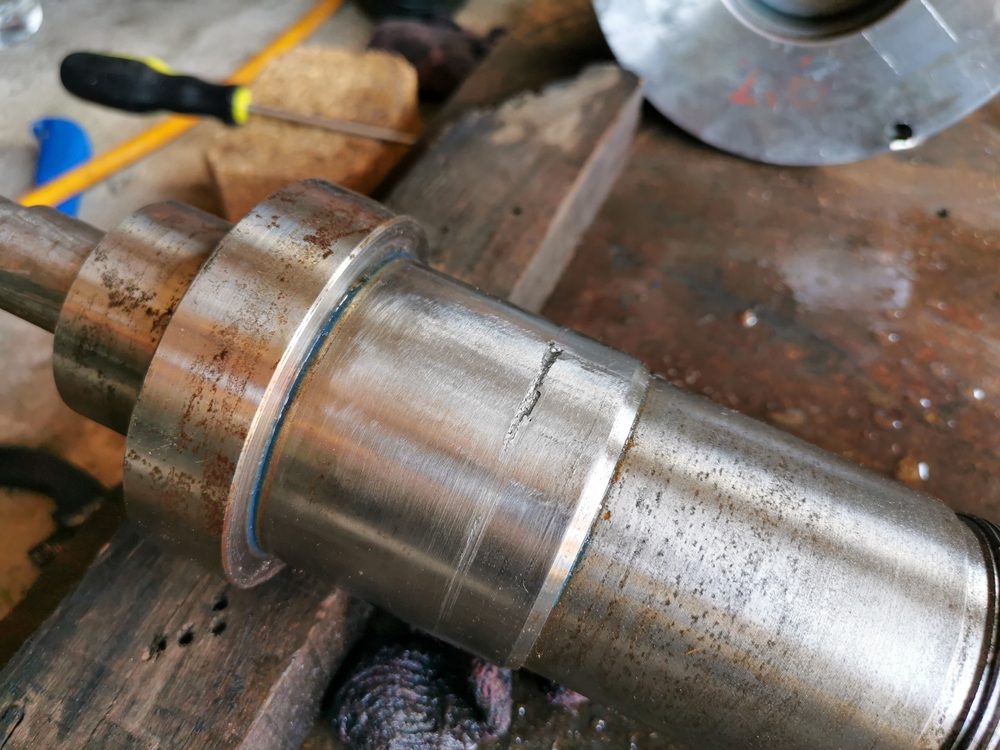
Contamination is one of the most common drivers of repeat cylinder issues. Debris on the rod is pulled into the gland during retraction. If the wiper is damaged or underspecified for the environment, particles enter and begin abrading the rod seal area. Abrasive wear creates scoring on the rod and accelerates seal breakdown. Once scoring exists in the travel zone, replacing seals without restoring the rod surface can lead to rapid recurrence.
These are the contamination and environment drivers that often show up in repeat failures.
Rod surfaces that routinely carry grit, fiber, or liquid residue into the gland.
Damaged or hardened wipers that no longer exclude debris effectively.
Corrosion marks or pitting in the sealing travel zone.
Rising operating temperature compared with prior baseline.
Oil condition issues such as darkening, odor change, or faster filter loading.
When these factors remain active, a seal swap becomes only a short-term fix.
Mechanical Root Causes: Misalignment, Side-Loading, and Impact Events
Mechanical contributors are just as important as fluid and contamination issues. Misalignment creates side-loading, which increases friction at the gland and drives uneven seal wear. If a compactor has worn pins, bushings, or mounting points, the cylinder may not travel straight. The result can be accelerated wear on rod seals, wear bands, and rod surfaces.
Beyond simple seal wear, impact events play a significant role in cylinder failure. A compactor that bottoms out hard or experiences material jams can induce bending stresses in the rod and mounting components. These geometric distortions, even if subtle, lead to uneven seal loading and contact patterns. Consequently, resulting leaks are often symptoms of structural deformation rather than poor seal quality.
To ensure long-term reliability, the state of the mounts must be scrutinized alongside the cylinder itself. Reinstalling a refurbished cylinder into damaged brackets, clevises with ovalized holes, or generally worn mounts will inevitably lead to premature failure of the new unit.
Key mechanical factors to investigate during troubleshooting include:
Excessive play in bushings and pins signals a loss of alignment.
Side-loading indicators, such as asymmetrical wear on wear bands.
Signs of frequent stalling or violent end-of-stroke impacts.
Localized scuffing or rod runout that occurs at consistent intervals.
Mounting hardware that exhibits deformation, elongation, or looseness.
By correcting these mechanical root causes, maintenance teams can often eliminate chronic leakage more effectively than by switching to a different seal manufacturer.
A Repeat-Failure Troubleshooting Workflow for Maintenance Teams
To eliminate recurring issues, a repeat-failure workflow must be documented, consistent, and safety-focused. Such a process helps determine if a repair requires advanced surface treatments, mount adjustments, or better contamination management.
Begin by defining specific symptoms: does the unit drift under load, indicating an internal bypass, or is there jerky, unstable motion?
Next, perform visual inspections to find root cause indicators. Clean the gland and rod, then run several cycles; if leaks reappear promptly, check the wiper and the rod's surface in the travel area.
An effective workflow minimizes uncertainty through the following steps:
Categorize the failure mode as motion irregularity, drift, or an external leak.
Examine the gland and rod for surface flaws and signs of contamination.
Assess the wiper's state and how well it excludes contaminants.
Check bushings, pins, and mounts for excessive play causing side-loading.
Analyze filter trends and oil health to detect heat-related wear and ingestion.
By adopting this systematic method, repeat failures become manageable challenges with identifiable causes.
Stop Repeat Failures With C&L Cylinder and Machine
Repeat failures are often a sign that surface condition, alignment, or contamination control needs more than a basic reseal. C&L Cylinder and Machine repairs large hydraulic cylinders for balers, heavy equipment, and industrial presses in our Georgia facility.
We employ in-house machining, welding, and specialized disassembly and reassembly setups specifically designed for oversized components. Our process-driven approach supports inspection of rods, bores, glands, and wear patterns that help identify why cylinders on waste compactors keep returning with the same symptoms.
If recurring failures persist with your compactor cylinder, contact C&L Cylinder and Machine to evaluate the specific technical requirements of your operating conditions.


