5 Warning Signs Your Industrial Press Hydraulic Cylinder Needs Immediate Repair
- C&L Cylinder and Machine

- Feb 2
- 4 min read
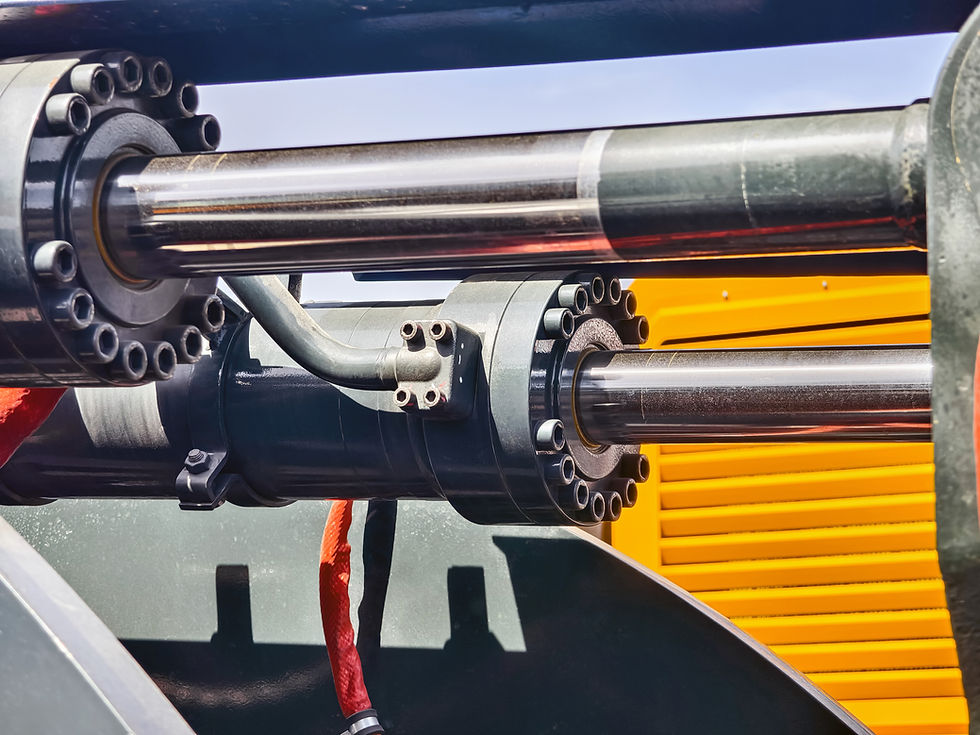
When you start noticing small inconsistencies in the performance of your industrial press, it is tempting to keep running until the next planned shutdown. That approach can be costly. Press hydraulics operate under high force, tight tolerances, and cycle-to-cycle consistency requirements that leave little room for “good enough.” A cylinder that is beginning to fail can compromise part quality, damage tooling, and create safety hazards in a short span.
Maintenance leaders don’t need to guess. Most urgent cylinder problems announce themselves through specific symptoms that show up in production behavior, fluid condition, or visible wear. The key is recognizing which signals demand immediate action versus which ones can be tracked for trend.
Why Press Cylinder Issues Escalate Faster Than Most Teams Expect
Press cylinders are often subjected to side-loading, abrupt reversals, and peak pressures that amplify small defects. A minor rod imperfection can shred seals rapidly. Contamination can turn a small leakage point into a system-wide reliability issue. Heat buildup can accelerate seal hardening and reduce lubrication, which increases friction and worsens wear.
Press applications also magnify risk because outcomes are measurable. Even subtle changes in cylinder performance can translate into dimensional variation, inconsistent forming pressure, or misalignment. That is why cylinder warning signs in a press environment deserve a shorter decision window than similar symptoms on less precision-sensitive equipment.
5 Warning Signs Your Industrial Press Cylinder Needs Immediate Repair
The following signs commonly indicate that continued operation will increase damage or compromise safety. Treat them as triggers for escalation, not “watch items”.
1) Rapid External Leakage or Spray Under Load
A small oil film around the gland can be normal in some conditions. A leak that reappears quickly after cleaning, forms drips, or sprays during peak pressure is different. It can indicate a damaged seal, a compromised rod surface, or a loose port connection. Continued operation risks fluid loss, slip hazards, and contamination ingress.
2) Drift, Creep, or Inability to Hold Position
If the ram slowly moves when it should remain stationary, internal bypass is a leading suspect. Press performance relies on controlled force and stable position. Drift can affect dwell, pressure control, and repeatability. It also increases the chance of unexpected movement that creates a safety concern during setup, inspection, or maintenance.
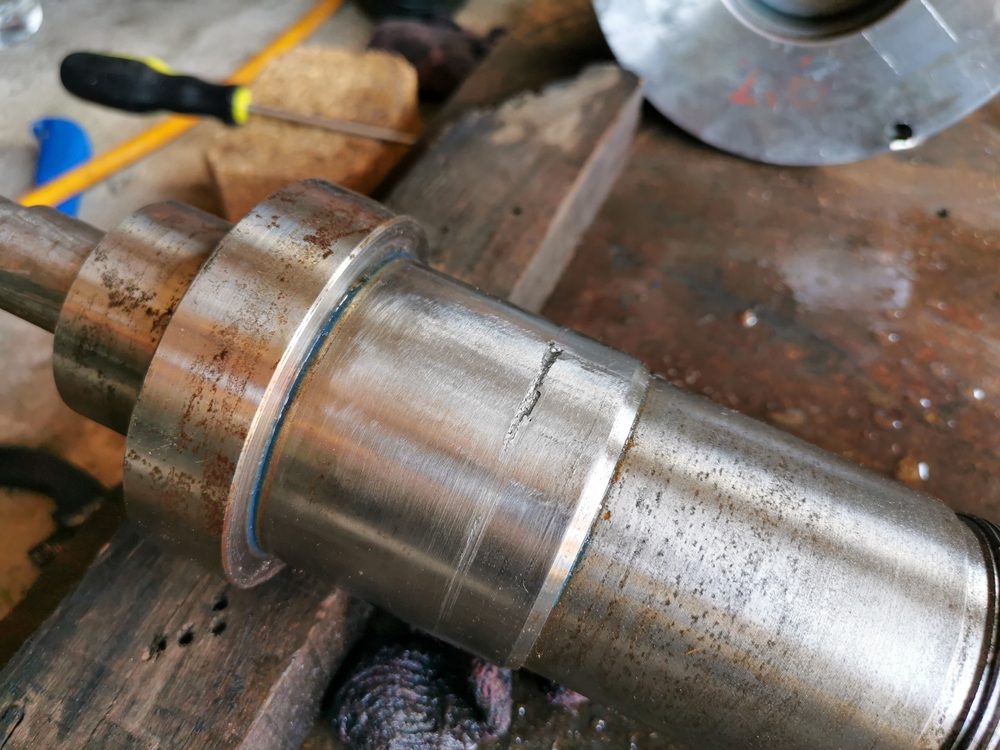
3) Scoring, Pitting, or Discoloration on Rod
Rod surface condition directly impacts seal life. Scratches that catch a fingernail, corrosion pits, or heat discoloration often signal that sealing surfaces are being compromised. If the rod is damaged, replacing seals alone can become a short-lived fix. Running a press with a harmed rod can quickly convert a manageable repair into a complex rebuild.
4) Abnormal Motion: Hesitation, Chatter, or Inconsistent Speed
A healthy cylinder extends and retracts smoothly. Jerky travel, stiction, or vibration can point to air entrainment, contamination, flow restriction, or mechanical misalignment that is loading the rod sideways. In a press, inconsistent motion is more than an annoyance. It can affect part quality and put additional stress on pins, bushings, and structural mounts.
5) Rising Operating Temperature and Fluid Condition Changes
Heat is both a symptom and a multiplier. If your system temperature climbs beyond its normal range, seals and fluid degrade more quickly. Darkened oil, burnt odor, or foaming can accompany overheating. Those indicators suggest the cylinder and the hydraulic circuit may be operating inefficiently, potentially due to internal leakage, restriction, or aeration.
What to Document Before You Shut the Press Down
A controlled stop is easier when you can hand a repair partner clear information. Documentation also helps your team avoid misdiagnosis and speeds root cause evaluation.
Record press hours, cycle rate, and when the symptom first appeared
Capture photos of the rod, gland area, ports, and mounting points
Note temperature readings and pressure behavior during the last stable runs
Describe the motion issue using consistent terms such as hesitation, vibration, or slow response
List recent events such as die change, overload, jam, or hose replacement
If your operation uses condition monitoring, attach trend graphs or maintenance logs. Clear records reduce back-and-forth and improve repair decisions, especially when time matters.
Smart Next Steps to Prevent Repeat Failures After Repair
Immediate repair is only part of the objective. Avoiding the same failure mode is the long-term win. Many repeat issues trace back to alignment, contamination, or operating conditions rather than the seals alone.
Start with basic mechanical checks. Verify that mounts are not worn, pins are not ovalized, and the load path is aligned with the cylinder axis. Side-loading is a common culprit in press applications. Review your filtration and housekeeping practices, since contamination accelerates wear across the entire circuit.
Use these checkpoints to reduce recurrence after the cylinder returns to service.
Confirm alignment at full extension and retraction, not only at mid-stroke
Verify correct fluid level and eliminate air ingress at suction lines and fittings
Replace filters according to condition, not only calendar intervals
Inspect hoses for internal collapse, rub-through, or tight routing that strains ports
Establish baseline cycle time and temperature so changes are obvious later
These steps help protect the repaired cylinder and the press itself, improving reliability for the entire cell.
Get Your Press Back to Stable Performance With C&L Cylinder and Machine
If your press is showing any of the symptoms above and you need a clear repair plan, reach out to our experts at C&L Cylinder and Machine. We’ll coordinate evaluation, discuss your cylinder condition, and outline repair options that fit your maintenance window. Let’s connect.