
Industrial Press Hydraulic Cylinders: Maintenance Schedules for 24/7 Manufacturing

An industrial press line that runs around the clock creates a unique maintenance problem. You cannot rely on long idle periods to catch up on inspections, and you rarely get perfect conditions for teardown work. Meanwhile, press hydraulics carry high forces, tight tolerances, and cycle-to-cycle consistency requirements that leave little room for drift, leakage, or motion changes. The result is predictable: small cylinder issues can quickly become quality problems, safety concerns, or unplanned downtime.
A strong maintenance schedule for press cylinders is not about adding more tasks. It is about distributing the right checks across shifts, capturing meaningful data, and using clear escalation triggers so repairs happen on your timeline, not during a production emergency. This guide lays out a practical cadence for 24/7 manufacturing teams, with actions that fit shift handoffs and planned outages.
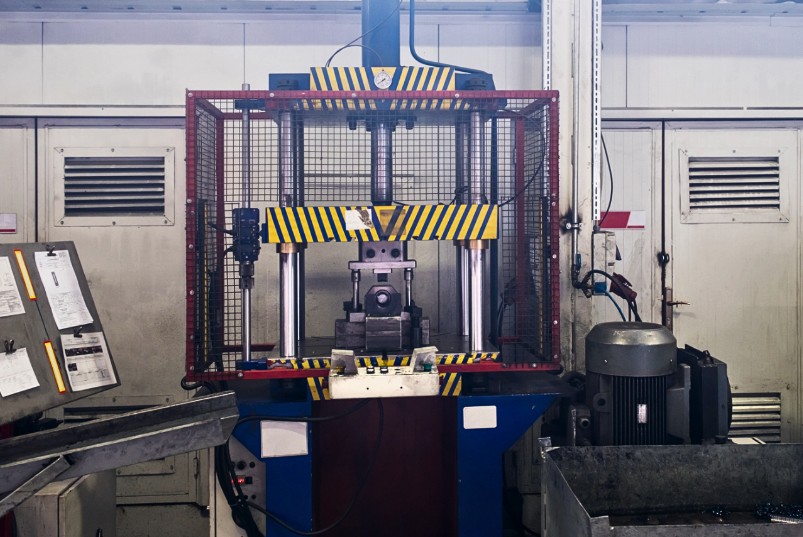
Why 24/7 Press Duty Requires a Different Maintenance Mindset
Continuous production changes the rules. In a two-shift environment, you may have daily windows for deeper checks. In a 24/7 plant, inspection time must be built into the workday, often as micro-stops or short checks during changeovers. The goal is early detection, because the longer you run a cylinder that is degrading, the more likely you are to damage rods, seals, mounts, and sometimes tooling.
Press cylinders also behave differently than many mobile applications. They often operate under high pressure and repeatable stroke patterns. That makes baseline comparisons powerful. When a cylinder begins to bypass internally, you may see slower movement, drift, or longer dwell changes before external leakage appears. If you track baselines, those shifts become measurable and easier to act on.
A final mindset shift is cross-functional coordination. Production, maintenance, and quality must agree on what symptoms justify intervention. A press can keep running while producing off-spec parts, and that creates a hidden cost that is often larger than a controlled service window.
Industrial Press Cylinder Inspection Cadence for Round-the-Clock Plants
A successful cadence uses layers. Some checks happen every shift. Others occur weekly. Deeper validation happens monthly or quarterly, depending on duty cycle and risk.
Start with shift-level checks that focus on fast indicators: leakage, rod condition, motion smoothness, and temperature. These checks should be quick, consistent, and documented. Use the same observation points each time so data remains comparable.
Monthly checks can include simple performance validation. Track cycle time during a consistent production run. Observe hold behavior under load to check for drift. Note the temperature at a consistent point in the process. These measures are not complicated, but they create a record you can use to justify planned maintenance.
An industrial press check schedule may look like this:
Each shift: rod wipe and visual check, gland and port scan, listen for new noise, note temperature
Weekly: inspect mounts and pins, check hoses and clamps, verify filters and breathers, clean around glands
Monthly: compare cycle time baseline, drift behavior check, review trends from shift logs
Quarterly: fluid condition review, deeper mount wear assessment, update escalation thresholds based on trends
Adjust this cadence based on press criticality. A press that drives a bottleneck process should have more frequent checks than a secondary line with redundancy.
Planning Micro-Stops, Shift Checks, and Scheduled Outages
The biggest challenge in 24/7 manufacturing is finding time. Micro-stops are the solution. A five-minute check during a shift change can prevent a multi-day outage later. The key is structure: define what gets checked, who checks it, and where the notes go.
Scheduled outages should be used for tasks that require lockout and deeper access. That includes mount bushing checks, alignment verification, and more thorough cleaning and inspection. Use outage time to address root causes, not only symptoms. If an industrial press cylinder repeatedly leaks, investigate the rod surface condition and alignment. If the system repeatedly runs hot, evaluate restrictions and internal leakage sources.
Documentation is also part of planning. Photos and short notes create continuity across shifts and reduce disagreement about severity.
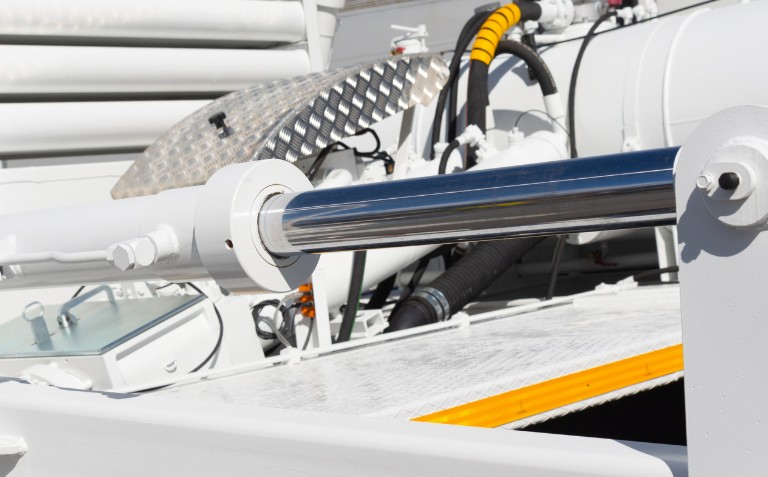
Escalation Triggers That Justify Immediate Service Planning
A 24/7 plant needs clear triggers for action. Without them, teams tend to delay decisions until the problem is undeniable. That delay often increases damage and extends downtime.
Escalate immediately when leakage increases quickly or becomes active dripping. Drift under load is another serious trigger because it can affect press force, dwell, and repeatability. Rod damage that you can feel with a fingernail indicates seals will continue to fail until the surface is restored. Motion irregularities such as hesitation, chatter, or inconsistent speed can signal contamination, aeration, or misalignment. Rising temperature, combined with any of these symptoms, suggests accelerating wear.
Use trigger categories that are easy to apply.
Stop and plan service: spray under pressure, rapid fluid loss, unsafe movement, and mount cracking
Schedule soon: recurring leakage, measurable drift, rod scoring, significant speed change
Monitor with data: light residue, minor seep at fittings, stable motion, and temperature
This structure helps production understand why maintenance is intervening, and it helps procurement plan parts and logistics without last-minute surprises.
Build a Repair Plan That Fits Your Production Calendar With C&L Cylinder and Machine
When an industrial press cylinder needs repair, the ability to handle size and complexity matters, especially for large units that cannot be swapped easily. At C&L Cylinder and Machine in Lindale, Georgia, we repair and build large hydraulic cylinders for industrial presses and heavy applications. With heavy machining, welding, and specialized disassembly and reassembly setups , our facility is designed for handling oversized components.
If your plant is seeing drift, leakage growth, rod surface damage, or motion inconsistency that is affecting uptime or quality, you can often avoid a disruptive failure by planning a controlled repair window. Chat with us to discuss your hydraulic cylinder condition and the next steps to ensure optimal uptime for your production schedule.


